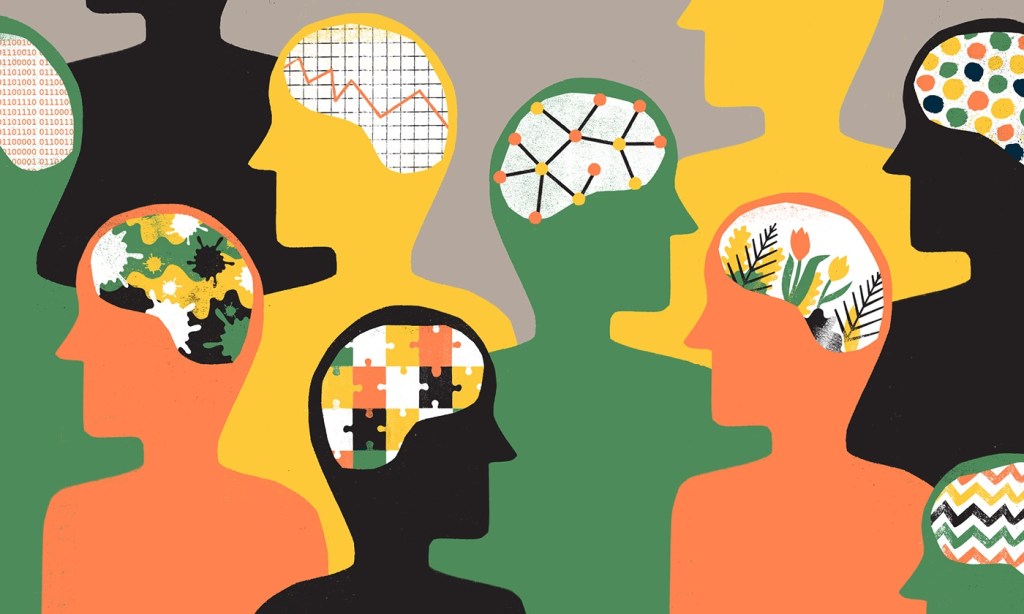
Today is World Mental Health Day (WMHD). Created by the World Federation for Mental Health (WFMH), it was first observed on 10 October 1992.
WFMH recognised the urgent need to raise global awareness about mental health issues. At the time of WMHD’s creation, mental health was often stigmatised and overlooked. There was a lack of understanding and empathy for people with mental health conditions. As a result, one of WMHD’s main goals continues to be the reduction of stigma and discrimination associated with mental health. Stigmatisation can prevent people from seeking help, contributing to a significant treatment gap. WMHD promotes education and understanding about mental health and the diverse range of mental health challenges people face. Providing accurate information and resources helps individuals, families, and communities better comprehend mental health issues.
WMHD also aims to foster solidarity and mobilise support and action at various levels and between different stakeholders, including governments, healthcare organisations, NGOs, communities and individuals. Advocacy for increased funding, resources, and services for mental health care is a central aspect of the day.
Each year, WMHD focuses on a specific theme or aspect of mental health. The 2023 theme is “Mental health is a universal human right”. According to WHO, mental health is a basic human right, and everyone has a deserving and inherent right to the highest attainable standard of mental health, including the right to available, accessible, acceptable and good quality care and the right to liberty, independence and inclusion in the community. Having a mental health condition should never be a reason to deprive people of their human rights or exclude them from decisions about their health.
WMHD also provides an opportunity to highlight Africa’s growing mental health burden. More than 116 million people across the continent were estimated to be living with mental health conditions before the COVID-19 pandemic. The pandemic exacerbated this situation and increased awareness of the importance of mental health and the need for improved mental health services and support.
African countries have competing health and development priorities, and low government investment is one of the most significant hurdles to adequate and equitable mental healthcare services. On average, African governments allocate less than 50 US cents per capita to mental health, well below the recommended US$ 2 per capita for low-income countries. There are fewer than two mental health workers for every 100 000 people.
Africa is fortunate that a growing number of local NGOs focus on mental health issues as their primary or secondary activities, including advocacy, education and awareness-raising, research, and counselling and support services. They complement the interventions by governments and other stakeholders while also increasingly supporting the mental health and well-being of people working in the NGO sector.
The following 15 African NGOs play a critical role in responding to mental health issues in different parts of the continent:
Africa Mental Health Research and Training Foundation (AMHRTF) (Kenya)
AMHRTF’s vision is to be the centre of excellence in Africa for research, training, knowledge translation and advocacy in mental health. Founded in 2004 by Professor David Ndetei, Professor of Psychiatry at the University of Nairobi, it is dedicated to research in mental and neurological health and substance use to generate evidence for policy and best practice in providing innovative, appropriate, affordable and accessible mental health and substance use services to all Kenyans irrespective of their socio-economic status.
AMHRTF convenes the broadest possible spectrum of professionals from the mental and non-mental health fields to collaborate on mental health research and interventions. Its research focuses on various aspects of mental health, including the prevalence of mental health disorders, the effectiveness of different interventions, and the impact of mental health on communities. Research findings contribute to evidence-based mental health policies and practices in Kenya.
AMHRTF offers training and capacity-building programmes for mental health professionals, healthcare workers, and community health volunteers. These programmes aim to enhance the skills and knowledge needed to provide quality mental health care and support. It also conducts community outreach and education activities to raise awareness about mental health issues, reduce stigma, and promote mental well-being.
AMHRTF is also involved in advocacy activities to influence mental health policies and practices at the national and local levels and to ensure that mental health is a priority in healthcare agendas and that policies align with international standards.
Awesome Mind Speaks (Uganda)
Awesome Mind Speaks is a youth-led organisation that aims to transform mental health support for young people in Uganda. It understands the pressing issue of access to mental health information, resources and support systems for young people in Uganda. Therefore, its primary goal is to eliminate stigma and ensure affordable mental health services are accessible to every person.
To achieve its mission, Awesome Mind Speaks’ activities focus on sharing information, raising awareness, building capacity, advocating for change and providing referral support. It conducts school outreach programmes, engages with grassroots communities and facilitates dialogues. These efforts are guided by core principles such as being predictive, preventive, personalised, participatory, and promotional.
Awesome Mind Speaks has already reached over 10 000 individuals within and outside schools, and its stakeholder dialogues have impacted over three million people. Its work has been recognised through accolades like the Ember Spark Award, which acknowledges Awesome Mind Speaks as a pioneering force in the field of mental health support. Awesome Mind Speaks also collaborates with like-minded organisations, including government entities, to further advance youth mental health causes in Uganda.
Girls For Girls Africa Mental Health Foundation (Kenya)
The Foundation is a community-based, survivor-led organisation providing mental health, educational and legal support to people affected by sexual and gender-based violence in Mombasa County and elsewhere in Kenya. Registered in 2018, its mission is to foster healing and recovery among survivors to support them in accessing mental health care and seeking justice to build resilient trauma-sensitive communities.
The Foundation works with adolescent girls and young women, child marriage survivors, sexual gender-based violence survivors, adolescents living with HIV, and victims directly or indirectly affected by early marriage, trauma and economic hardships. It aims to empower them, their caregivers, and other marginalised people who face violence and stigma, to live healthy lives with autonomy and self-determination and to build resilient communities where they can access justice. The Foundation creates safe spaces where survivors and caregivers can process their trauma and begin a journey of healing and recovery in a community of lived experience.
Hardiness Unearth Great Success (HUGs) (Kenya)
HUGs is an organisation dedicated to providing support, resources and education to young adults and adolescents in Kenya struggling with mental health challenges. It was founded in 2019 by a group of passionate and driven youths with a common goal of creating a society where mental health is recognised, understood and destigmatised. They saw the need for a platform where individuals could share their experiences, stories, and truths surrounding mental health. By doing so, HUGs aims to break down barriers and create a sense of community among those facing similar struggles.
Today, HUGs is a thriving organisation with a strong community of supporters and volunteers. It continues to promote mental health awareness, provide support to those who need it, and advocate for improved mental health services. Its services include cognitive restructuring, addiction counselling, personal development, child therapy, relationship counselling, trauma counselling, supervision therapy, and mental health diagnosis and treatment.
HUGs has successfully reduced the stigma associated with mental health challenges and has helped many young people seek the help and support they need to manage their mental health.
Informed Future Generations (IFG) (Rwanda)
IFG is a nurses-led organisation founded in 2022 by student nurses at the University of Rwanda. Its mission is to transform Rwandan youth into informed decision-makers about their sexual reproductive health and rights (SRHR), HIV and AIDS, and mental health.
IFG operates through commissions focusing on SRHR, HIV and AIDS, and mental health issues, and combined with a gender transformative approach, addresses social and cultural norms which hinder people from becoming informed decision-makers.
IFG’s ongoing “No One is Immune” mental health awareness campaign aims to transform children and adults into informed decision-makers about their mental health. IFG implements it in secondary schools through mental health clubs and interclub competitions, including debates, dialogues and poems. IFG’s rehab centre assists children and adults diagnosed with mental disorders to recover successfully.
Mandate Health Empowerment Initiative (MHEI) (Nigeria)
MHEI is a mental health organisation aimed at improving mental health support in Nigeria. Registered in 2015, its mission is to promote mental health and psychosocial support in Nigeria and the rest of Africa through sensitisation, advocacy, outreach campaigns, community programmes, and school-based programmes for parents, teachers and students. It wants to build a mentally healthy society across Africa where people know their mental health status and are equipped to prevent mental disorders.
MHEI’s activities include advocacy on mental health care, reforms, and policy formulation and implementation; capacity-building in gender, maternal and child mental health support; sensitisation and prevention programmes on mental health, drugs and psychoactive substance use; and mental health psychosocial therapy and support that mitigates mental health cases around substance misuse, gender-based violence, child and maternal mental health, social violence and trauma.
Mental Health for Youth Initiative (MHYI) (Nigeria)
MHYI was founded in 2019 to address social issues surrounding mental health, including gross misconceptions and stigmatisation, inaccessibility of professional mental health care due to the cost of services, and the lack of data for evidence-informed research and advocacy for mental health. MHYI’s goal is for every Nigerian youth to be aware of their mental health and access quality mental health care and support. Its activities are derived from the United Nations Sustainable Development Goal 3, “Good Health and Well-being”, and its primary target audience is the youth between the ages of 14-25 years.
MHYI’s main activities focus on using social media platforms to educate young people on mental health topics and promote mental health conversations, providing counselling services to young people, exploring the use of several forms of art to promote mental health conversations and expressions, implementing several projects for specific demographics (e.g. “Every Mind Matters” project for groups in orphanage homes and IDP camps, “Mental Health Awareness and Intervention” project for secondary school students, etc.), convening mental well-being seminars to promote and encourage the adoption of better lifestyle practices, and conducting advocacy for the passing of the Mental Health Act, which became a law in January of 2023, and the decriminalisation of suicide by the Nigerian government.
MHYI works with the Federal Ministry of Youth Development, the Federal Ministry of Health, the National Drug Law Enforcement Agency (NDLEA) and other youth-focused NGOs. It aims to extend the impact of its work to every part of Nigeria and create a system that every young person can benefit from, as it believes mental health accessibility is a universal human right.
Mental Health Uganda (MHU) (Uganda)
MHU was established in 1997 by and for people with a lived experience of mental health conditions, their caregivers and service providers in Uganda. Its mission is to create a unified voice of people that influences the provision of required services and opportunities in favour of people with psychosocial disabilities in Uganda.
MHU provides leadership around advocacy for policy, rights and legislative reforms, community mental health care, capacity-building for member district associations, livelihood support, rehabilitation and reintegration of homeless people, user-led programming, and anti-mental health stigma and discrimination. It is passionate about normalising mental health conversations through stories shared by community-based young people with a lived experience (“Champions”). Sharing these real-life stories builds the resilience of the “Champions” to withstand stigma and inspires those silently battling to speak up.
MHU also runs Uganda’s first toll-free national counselling service, targeting young persons (15-35 years) with or at risk of mental health issues and their caretakers.
Mentally Aware Nigeria Initiative (MANI) (Nigeria)
MANI is Nigeria’s largest youth-run and youth-centred mental health organisation. Founded in 2016, it is committed to promoting mental health as an integral part of overall well-being. MANI’s core mission is to combat the stigma surrounding mental health issues and remove systemic barriers hindering access to quality mental health services. It has cultivated a community of like-minded individuals who share similar experiences and actively engage in advocacy, volunteer for the suicide hotline, and participate in mental health education programmes.
MANI’s main initiatives revolve around increasing awareness about mental health, advocacy work, and training. It runs a project called “Bridging The Gap”, aimed at promoting mental health awareness and establishing mental health clubs in primary and secondary schools and tertiary institutions.
Since its inception, MANI has achieved several significant milestones, including offering crisis intervention services to over 50 000 individuals, primarily youth, pioneering efforts to destigmatise mental health through advocacy and educational initiatives, and engaging in advocacy for improved mental health legislation, policies and funding at both national and international levels.
Mind Health Africa (Kenya)
Mind Health Africa is working towards promoting mental wellness in Africa through awareness creation, advocacy, research, therapy services, and the design and implementation of people-centred community-based interventions. Its vision is an Africa where people can openly talk about mental health in all spaces and access health services easily.
Founded in early 2023, Mind Health Africa’s current activities are awareness creation and advocacy about mental health and related matters, mainly through social media. It adds voice to knowledge-sharing sessions about mental health and related topics to initiate and catalyse transformation in the sector. Ultimately, Mind Health Africa is working towards expanding its programmes to as many regions on the continent as possible.
MindFreedom Ghana (MFGh) (Ghana)
MFGh was established in 2004 to improve the mental health and lives of persons with mental disabilities in Ghana. It aims to support persons with psychosocial disorders in their treatment regimen and advocate for conditions that would not infringe on their human rights and dignity; improve the social, moral and economic conditions of persons with psychosocial disabilities and deal with the stigma they suffer; promote activities that make persons with mental disabilities have a sense of belonging and acceptance in their communities; and create awareness and educate the public on matters of mental disabilities and human rights.
MFGh’s activities focus on advocacy, awareness-raising, prevention and research.
Some of MFGh’s recent projects include “Promoting Quality Access to Mental Healthcare and Rights of Persons with Mental Disabilities in Traditional Mental Health Centres in Ghana”, in conjunction with the Human Rights Advocacy Centre, Mental Health Authority and the Ghana Federation of Traditional Medicine Practitioners Associations, and “Provision of Covid-19 Information and Services for Persons with Mental Health Conditions and Caregivers”, which was funded by the National Democratic Institute.
Ndinewe Foundation (Zimbabwe)
Ndinewe Foundation is a mental health organisation which aims to enhance the mental health and well-being of Zimbabwean communities through research, education, advocacy and sustainable interventions. Established in 2021, it focuses on developing interventions that will significantly impact the mental health field in Zimbabwe and improve the lives of those affected by mental, neurological, and substance use disorders.
Ndinewe Foundation’s approach, known as the Mental Health in the Zimbabwean Context model, is centred on defining mental health from a Zimbabwean perspective, which reflects a Zimbabwean’s worldview, relationships with others and themselves, and the meaning of life. Its programmes include a monthly heart-to-heart support group that provides a safe space for young people to discuss mental health and receive support, and an annual Mental Health Education course that empowers young people to take action in the mental health space. Research is a core aspect of Ndinewe Foundation’s work and informs its advocacy and mental health education interventions.
Ndinewe Foundation collaborates with various stakeholders, including the Zimbabwean government, mental health advocates, practitioners, national organisations, people with lived experiences, funders, researchers and international stakeholders, in designing and establishing mental health initiatives that promote mental health awareness.
NPOwer (South Africa)
NPOwer is a first-of-its-kind mental health support programme that offers free mental health care and support to all non-profit organisations (NPOs) in South Africa. Introduced in 2020 during the COVID-19 pandemic, this initiative sees Tshikululu Social Investments partnering with the South African Depression and Anxiety Group (SADG), which provides psychological first aid to NPO leaders, staff and volunteers, many of whom are experiencing unprecedented strain and burnout.
The NPOwer programme includes a dedicated mental health and psychosocial support toll-free helpline managed by a team of dedicated counsellors. It is open 24 hours a day / 365 days a year, with counselling available in all 11 official languages.
Other NPOwer services include crisis interventions, follow-up calls and case management, nationwide referrals and resources, mental health-related information, handouts and brochures, monthly support group meetings held every second Friday of the month, monthly webinars on relevant topics, group or individual debriefings, capacity-building workshops on NPO-related issues, mental health-related talks, mental health care pack, website of resources available free to all non-profit workers, staff or volunteers, monthly support group meetings, and a monthly “Coffee Connect” with an NPO live chat via the NPOwer website.
South African Depression And Anxiety Group (SADAG) (South Africa)
SADAG is dedicated to improving the lives of South Africans affected by mental health issues. Mental illness and its stigma are a critical issue in South Africa. It is estimated that 1 in 5 people will, or do, have a mental illness. Established in 1994 in response to the absence of any formal advocacy structure for people with the standard and potentially disabling mental health problems of depression, bipolar and anxiety, SADAG has become South Africa’s leading advocacy and educational voice on patient advocacy, support, education and destigmatisation of mental illness.
SADAG’s mission is to actively work with all sectors of the community, including patients, health professionals, government and other NGOs, in urban, peri-urban and rural communities throughout the country, to achieve improved education about mental health issues, improved access to treatment and higher levels of treatment compliance, and better access to care across all sectors, resulting in enhanced general mental wellness in South Africa.
SADAG’s expertise lies in assisting patients and callers with mental health queries. It manages a free 30-line counselling and referral call centre and has an extensive database of state and private healthcare facilities, providers and practitioners, counselling centres, other NGOs, rehabilitation centres, shelters, doctors and social workers. The call centre receives over 2 500 calls daily from people nationwide.
SADAG’s activities also include a network of over 200 Support Groups throughout South Africa, including outreach groups in remote rural areas; educational materials, including free multilingual brochures on mental health issues, including depression, bipolar, PTSD, OCD, anxiety, trauma, sleeping disorders and schizophrenia; a monthly newsletter; a referral service to mental health professionals and free medical treatment where available; a comprehensive and informative website; country-wide training programmes in various languages; a schools programme aimed at learners, parents and educators; and media campaigns.
South African Federation for Mental Health (SAFMH) (South Africa)
SAFMH is the largest national mental health federation in South Africa. Founded in 1920, its mission is to achieve the highest possible level of mental health for all South Africans. SAFMH comprises a national office in Johannesburg, 17 constituent bodies (known as Mental Health Societies) located in all nine provinces, and about 100 member organisations nationwide.
SAFMH plays a vital role as an advocacy body, promoting community mental health care and deinstitutionalisation, and fighting for the rights of persons with psychosocial and intellectual disabilities. Its strategic focus areas include the implementation of national awareness campaigns, empowerment of mental health care users and mental health organisations, advocating for the human rights of mental health care users, and mental health research and information management.
While the national office engages strategically with government and other national and international mental health stakeholders and partners, the Mental Health Societies and other members are independent, community-based mental health organisations that deliver essential frontline mental health services to communities that are often under-resourced. The national office supports these organisations from a strategic national perspective and aims to streamline mental health services in South Africa.
These profiles showcase the critical contributions of NGOs in response to mental health issues in various African countries. However, this is not an exhaustive list of African NGOs involved in mental health issues, and many other NGOs also provide stellar work in countries and communities across the continent.


Leave a comment